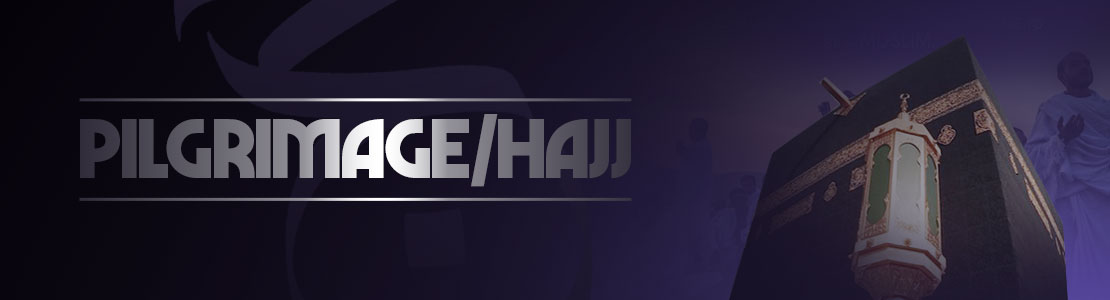
What is Hajj in Islam?
Hajj, the fifth pillar of Islam, is a pilgrimage undertaken to the holy city of Makkah during the month of Zul-Ḥijjah. The date of hajj in Islamic calendar begins on the 8th of Dhul Hijjah and lasts until the 13th of Dhul Hijjah. This profound journey, marked by its challenges, is an obligatory endeavour for financially and physically capable Muslims.
It involves completing the designated rituals of Hajj in honor of Allah Almighty. Those who successfully accomplish this voyage earn the esteemed title of Ḥaji. Every year, millions of Muslims gathered in Makkah for Hajj festival – the sacred Muslim Pilgrimage annually, underscoring the unity of humanity and their equal devotion before Allah Almighty.
A Significant Religious Gathering
As a fundamental and 5th pillar of Islam, Hajj holds immense significance as an act of worship. Every year, multitudes of Muslims wear simple and identical attire, transcending differences in colour and race, setting aside discord to assemble in the sanctified precincts of the Haram. The world stands amazed at this extraordinary display of harmony.
This juncture bestows unparalleled blessings upon the pilgrims, endowing them with Allah Almighty's special favour. The gifts bestowed upon these fortunate individuals in return for their Hajj experience arouse a profound longing among less privileged Muslims, igniting a fervent aspiration to embark on a sacred journey of their own.
Hajj, the sacred pilgrimage to the holy city of Mecca, holds profound benefits that extend beyond the physical journey. The spiritual benefits of Hajj are manifold, as it offers a unique opportunity for Muslims to cleanse their souls and seek forgiveness for their past transgressions. The act of performing Hajj is a demonstration of devotion and submission to Allah's will, emphasizing the importance of humility and unity among believers.
The importance of Hajj in Quran and Hadith is underscored, with verses highlighting its pivotal role in the spiritual growth and development of a Muslim. The Quran and Hadith stress the transformative power of Hajj, emphasizing its ability to purify the heart and renew one's faith. The rituals performed during Hajj symbolize the trials and tribulations faced by the Prophet Ibrahim (Peace Be Upon Him) and his family, exemplifying the unwavering trust in Allah's providence.
Consequently, the importance of Hajj resonates deeply within the Islamic tradition, serving as a means of drawing closer to Allah, seeking forgiveness, and fostering a sense of communal harmony among Muslims from diverse backgrounds.
Types of Hajj
There are three types of Hajj in Islam:
This is the most favored form of Hajj, termed as Qiran. Those embarking on this Hajj are referred to as Qarin. In this type, the pilgrim declares the intention for both Hajj and Umrah simultaneously upon entering the state of Ihram.
Intention of Hajj Qiran:
The Qarin is required to formulate the intention for both Hajj and Umrah using the subsequent wording:
"Ya Allah Almighty! I make the intention of Hajj and Umrah, make both of them easy for me and accept them from me. I have made the intention of Hajj and Umrah and have put on the Ihram of both just for the sake of Allah Almighty."
A pilgrim undertaking this form of Hajj is known as a Mutamatte. Those arriving from beyond the Miqat during the Hajj months are eligible to perform this type. For instance, individuals from the Indo-Pak region commonly opt for Tamattu. The advantage lies in the fact that a Mutamatte, having completed Umrah, is permitted to undergo Halq or Qasr and thereby exit the state of Ihram. Subsequently, on the 8th of Zul-Hijjah or earlier, the pilgrim assumes the Hajj Ihram.
The individual undertaking this variation of Hajj is referred to as a Mufrid. This category of Hajj solely involves assuming the Ihram for Hajj without incorporating Umrah. Those residing within Makkah and Hilli, essentially the region between the Haram area and Miqat (such as the inhabitants of Jeddah), opt for Hajj Ifrad. This type is also open to individuals arriving from foreign nations.
Intention of Hajj
After putting on the Ihrm of Hajj, the Mufrid should make the following intention. Similarly, after putting on Ihram, the Mutamatte' should also make the following intention on 8th Zul-Hijjah or before it.
"Ya Allah Almighty! I make the intention of Hajj, make it easy for me and accept it from me. Help me in offering it and make it blessed for me. I have made the intention for Hajj and have worn its Ihram for the sake of Allah Almighty."
Tawaf in the Rain with the Prophet (Peace Be Upon Him)
What a magnificent experience it is to engage in Tawaf while being blessed by rain! Sayyiduna Abu Iqaal (May Allah Almighty Be Pleased With Him) has expressed:
"I was once privileged to perform Tawaf with Sayyiduna Anas Bin Malik (May Allah Almighty Be Pleased With Him) in the rain. After we offered two Rakat Salah at Maqaam Ibrahim." Sayyiduna Anas (May Allah Almighty Be Pleased With Him) said to me, "Start your deeds anew. Indeed, your previous sins have been forgiven. The Beloved Prophet (Peace Be Upon Him) gave the same good news to us and we were privileged to perform Tawaf with him in the rain."
(Ibn Majah, vol. 3, pp. 524, Hadees 3118)
Rewards & Blessings of an Accepted Hajj
The sacred ahadith about hajj elaborates the hajj significance and merits of Hajj-e-Mabroor.
1
The Prophet Hazrat Muhammad (Peace Be Upon Him) has conveyed: "The reward of an accepted Hajj is not less than Paradise." It was humbly asked, "What is meant by Maqbool (accepted)?" It was replied, "The Hajj in which food is given and good conversation is made." (Al-Mujam-ul-Awsat, vol. 6, pp. 173, Hadees 8405)
2
Furthermore, The Prophet of Mercy (Peace Be Upon Him) has stated: "The reward for an accepted Hajj is Paradise." The blessed companions humbly asked, "Ya Rasoolallah (Peace Be Upon Him)! What is an accepted Hajj?" It was replied, "The Hajj in which the hungry are fed and Salam is to be promoted." (Kanz-ul-Ummal, vol. 3, pp. 7, Hadees 11830)